Showing posts with label Messiah. Show all posts

Monday, 5 February 2018

Joseph's Story part 2; Judah's story

Joseph's Story part 2; 

Judah's story

Genesis 38

Who found that Scripture inspiring? Remember, it is God's word, written for our blessing. We need to recall the riddle of Sampson, "out of the strong came something sweet," and pray God feeds us through this strong passage. 

Last time we looked at Joseph’s story. He was sold into slavery, suffered, was found faithful, rescued his entire family plus the Egyptians, and all his brothers bowed down to him just as in the dream God had sent. You would think that he would therefore be the ruler, and that the Messiah would descend from his line. Remember also that it was Judah who had the idea to sell him into slavery. Which is why this is a very strange verse;

 “For it is clear that our Lord descended from Judah,” (Hebrews 7:14)

How could the Messiah come through Judah? So far, he has shown no moral excellence, achieved nothing of value. So, why did God choose Judah? What has happened? These questions are why this week we will be looking at Judah’s story.

We are also going to use a story-telling technique popular in TV series. You know how when there is a TV series you like, the episodes usually fit into a predictable pattern, they find a crime, they solve it or whatever, but every so often, an episode starts completely differently – maybe they are in the boot of a car, we have no idea why, they are being shot at by people we have never met, and just as they are about to die, there is an add break, we are told to drink Coca Cola and drive a Subaru, and we get back to the show, it says “sometime earlier”, and we proceed with the back story, which then explains why we were in the car boot etc.

That is how we are going to do this today. There are two main parts where Judah’s story takes centre stage in Genesis, and we are going to jump in at the second part of the story, at Genesis 42, and then go back to look at the back-story later. We are going to do it this way as the second part highlights the importance of the first.

So, Genesis 42 …

Quick re-cap; Judah and his brothers sold Joseph into slavery because they resented him being the favourite. (Genesis 37:4 "When his brothers saw that their father loved him more than any of them, they hated him and could not speak a kind word to him".) Joseph is now second in all Egypt, and the brothers have already once gone to him for grain, and left Simeon in captivity there, and told they must return with Benjamin if they wish to see him again. But, having been monstered by joseph on the first trip, they are never going back there, and are seemingly prepared to leave Simeon in the lurch indefinitely. 

But the drought continues to worsen.

First Reuben tries to talk their dad into it; Genesis 42:37-38 Then Reuben said to his father, "You may put both of my sons to death if I do not bring him back to you. Entrust him to my care, and I will bring him back." 38 But Jacob said, "My son will not go down there with you; his brother is dead and he is the only one left. If harm comes to him on the journey you are taking, you will bring my grey head down to the grave in sorrow." 

The famine gets still worse, and finally, Judah steps up; Genesis 43:8-11 Then Judah said to Israel his father, "Send the boy along with me and we will go at once, so that we and you and our children may live and not die. 9 I myself will guarantee his safety; you can hold me personally responsible for him. If I do not bring him back to you and set him here before you, I will bear the blame before you all my life. 10 As it is, if we had not delayed, we could have gone and returned twice." 11 Then their father Israel said to them, "If it must be,” 

So, the brothers return to Egypt. Here, Joseph, still unrecognised by them,  holds a feast for the brothers, and Benjamin is spoilt, given 5x as much food as everyone else. Now, few things are as finely judged as the amount of food on your sibling’s plate, and Joseph isn’t even subtle. Benjamin gets 5 times as much everyone else! Joseph has just placed a coat of many colours on Benjamin’s shoulders! Singled him out for favouritism in front of his brothers. He has fanned into flames any lingering resentments the brothers may hold towards him, the other of Rachel’s sons. And then, with a false accusation of theft, an accusation the brothers don’t know is false (maybe the little twerp did nick the cup?) Joseph has both reminded them of their motive, the same one they had against him, and then provided them with means, the false accusation, and thereby, the opportunity. Will the brothers now repeat history and abandon the other son of Rachel in Egypt? The brothers are brought before Joseph;

Genesis 44:16-17 "What can we say? How can we prove our innocence? God has uncovered your servants' guilt. We are now my lord's slaves--we ourselves and the one who was found to have the cup." 17 But Joseph said, "Far be it from me to do such a thing! Only the man who was found to have the cup will become my slave. The rest of you, go back to your father in peace."

At this point, Joseph’s job is done. The focus now shifts squarely onto the brothers. And all salvation history will depend on their reply. We have reached the crisis point on which everything else depends. Judah again steps forward to have a word with Joseph. Will he behave like he did last time, and let a son of Rachel stay in Egypt as a slave to save his own freedom? Listen to what he says;


Image result for judah joseph story

Genesis 44:18-34 my lord, let your servant speak a word to my lord. Do not be angry with your servant, though you are equal to Pharaoh himself.

 19 My lord asked his servants, 'Do you have a father or a brother?'

 20 And we answered, 'We have an aged father, and there is a young son born to him in his old age. His brother is dead, and he is the only one of his mother's sons left, and his father loves him.'

 21 "Then you said to your servants, 'Bring him down to me so I can see him for myself.'

 22 And we said to my lord, 'The boy cannot leave his father; if he leaves him, his father will die.'

 23 But you told your servants, 'Unless your youngest brother comes down with you, you will not see my face again.'

 24 When we went back to your servant my father, we told him what my lord had said.

 25 "Then our father said, 'Go back and buy a little more food.'

 26 But we said, 'We cannot go down. Only if our youngest brother is with us will we go. We cannot see the man's face unless our youngest brother is with us.'

 27 "Your servant my father said to us, 'You know that my wife bore me two sons.

 28 One of them went away from me, and I said, "He has surely been torn to pieces." And I have not seen him since.

 29 If you take this one from me too and harm comes to him, you will bring my grey head down to the grave in misery.'

 30 "So now, if the boy is not with us when I go back to your servant my father and if my father, whose life is closely bound up with the boy's life,

 31 sees that the boy isn't there, he will die. Your servants will bring the gray head of our father down to the grave in sorrow.

 32 Your servant guaranteed the boy's safety to my father. I said, 'If I do not bring him back to you, I will bear the blame before you, my father, all my life!'

 33 "Now then, please let your servant remain here as my lord's slave in place of the boy, and let the boy return with his brothers.

 34 How can I go back to my father if the boy is not with me? No! Do not let me see the misery that would come upon my father."

Image result for judah joseph story 

Here Judah volunteers to be Joseph’s slave, (not knowing that it is Joseph, only that he is, as Judah puts it, “equal to Pharaoh himself”) in order that his father Jacob would not die of grief over Benjamin; “let your servant remain here as my lord's slave in place of the boy, and let the boy return with his brothers. … So now, if the boy is not with us when I go back to your servant my father and if my father, whose life is closely bound up with the boy's life, sees that the boy isn't there, he will die.”

So finally, after years of bitterness and anger and self-reproach, a life defined in many ways by his striving against his father’s favouritism of Joseph, Judah comes to terms with, acknowledges and accepts the fact that his father loves the sons of Rachel more than him; ("Your servant my father said to us, 'You know that my wife bore me two sons. One of them went away from me, and I said, "He has surely been torn to pieces." And I have not seen him since.’”) He mentions his father's favouritism for Benjamin simply as background context, he utters no words of self pity, he finally lets go of the bitterness which had earlier consumed his life. This is not about him. It is about his father. And Judah, out of his own love for this same father, freely volunteers and offers his life to be a slave. Given the opportunity to repeat past history, he says rather he would prefer to die as a slave than do that again. Joseph could have hoped for no finer apology for what they had done to him. It is this act of humility and love which at last breaks down the dividing wall between the brothers and Joseph. They are united at last by their shared love of their father.

"Now then, please let your servant remain here as my lord's slave in place of the boy, and let the boy return with his brothers. How can I go back to my father if the boy is not with me? No! Do not let me see the misery that would come upon my father." Then Joseph could no longer control himself before all his attendants, and he cried out, "Have everyone leave my presence!" So there was no one with Joseph when he made himself known to his brothers. And he wept so loudly that the Egyptians heard him, and Pharaoh's household heard about it. Joseph said to his brothers, "I am Joseph! Is my father still living?"

Judah himself became their peace, and made the two one and destroyed the barrier, the dividing wall of hostility. While Reuben was the older, it was Judah who stepped up and volunteered to give his life here.

Judah did in fact get one thing wrong – he thought that his father did not regard him, or care about him. We find out just how wrong he was in the next scene where the brothers play an important role, when they receive the blessings of their dying father. These blessings are themselves a wonderful example of the Bible being fully human and fully divine at the same time; Jacob’s feelings for his sons come through loud and clear, yet the Messiah himself is also prophesied through these blessings. They are Jacob’s words to his sons as inspired by their heavenly Father.  

In these blessings, Jacob looks Judah in the eyes and says; Genesis 49:8-10 "Judah, your brothers will praise you; … your father's sons will bow down to you. … 10 The sceptre will not depart from Judah, nor the ruler's staff from between his feet, until he comes to whom it belongs and the obedience of the nations is his.”

For Judah was loved and regarded. Jacob had indeed seen what he had done, knew how hard it had been to finally confess and own up, and decreed that even Joseph should bow down to him.

All of which has a profoundly Philippians 2 feel to it –

“make my joy complete by being like-minded, having the same love, being one in spirit and purpose.

 3 Do nothing out of selfish ambition or vain conceit, but in humility consider others better than yourselves.

 4 Each of you should look not only to your own interests, but also to the interests of others.

 5 Your attitude should be the same as that of Christ Jesus:

 6 Who, being in very nature God, did not consider equality with God something to be grasped,”


Judah indeed had started out in selfish ambition and vain conceit, hating the idea that Joseph might be better than him, looked to his own interests and grasped for equality with his brother. But then, in this second part of his story, we find an utterly changed man. To misquote the next part of Philippians 2, “but Judah made himself nothing, taking the very nature of a slave [remember, Judah offered himself to be a slave for life] … Therefore his father exalted him to the highest place and gave him the name that is above every name, that at the name of Judah every knee should bow,”

Before you think that that is blasphemous, or a misuse of Scripture, look again at the passage; “Your attitude should be the same as that of Christ Jesus: Who, being in very nature God, did not consider equality with God something to be grasped,”

Paul gives us this aspect of Jesus as an example of how we should behave, as a role model for us. He wants us to learn from and do the same as Jesus did here. As Jesus himself said; “Take my yoke upon you and learn from me.” And here is an example of someone doing just that. Of someone living in their own lives this Christ like pattern. This is what that looks like. Jesus himself also makes this connection between his behaviour and ours; Mark 10:43-45 whoever wants to become great among you must be your servant, 44 and whoever wants to be first must be slave of all. 45 For even the Son of Man did not come to be served, but to serve, and to give his life as a ransom for many." Peter likewise encourages us in exactly the same way; 1Peter 5:5-6 “All of you, clothe yourselves with humility toward one another, because, ‘God opposes the proud but gives grace to the humble.’ 6 Humble yourselves, therefore, under God's mighty hand, that he may lift you up in due time.”

Having forsaken his earlier ways, having tasted the bitterness of his sin, Judah then humbled himself, and, in his father’s blessing, was raised in due time.

I asked earlier what had Judah done that he should be given the messiahship. What great deed or teaching had he given? It turns out all he had done was to repent. That might not seem like much, but it is everything. It can be darn hard to admit when we are wrong, to turn from out sin, and repentance is central to the gospel of the Messiah.

So, why is the Messiah from Judah, not Joseph? Why is Judah elevated above Joseph in this regard? Joseph is loved and honoured, and given a double blessing, and was made second only to Pharaoh, but why is the throne given to Judah?? Because of the principle Jesus enunciated; Luke 15:7 “I tell you that in the same way there will be more rejoicing in heaven over one sinner who repents than over ninety-nine righteous persons who do not need to repent.” "Brothers, what shall we do?" And Peter said to them, "Repent and be baptized every one of you in the name of Jesus Christ for the forgiveness of your sins, and you will receive the gift of the Holy Spirit.” This is why the Messiah is descended from Judah, why Jesus is Judah’s greater son. The Gospel is pre-figured in Judah’s act!

Judah represents the sinner who repented, Joseph the righteous man who never needed to. In crowning a repentant sinner, God declares that his Gospel is for sinners.

Psalm 78:67-68 Then he rejected the tents of Joseph, he did not choose the tribe of Ephraim; 68 but he chose the tribe of Judah, Mount Zion, which he loved.

Just as what Abraham was prepared to sacrifice, God did sacrifice, so what Judah was prepared to suffer (slavery till death), Jesus did suffer. While Judah volunteering for this made peace between the brothers and broke down the wall of hostility that had existed between them till then (and that was a lot of hostility!!), and restored Joseph to his father, Jesus actually laying down his life broke down the dividing wall between all peoples, and made our peace with God, the father of us all.

“Christ Jesus: Who, being in very nature God, did not consider equality with God something to be grasped, but made himself nothing, taking the very nature of a servant, being made in human likeness. And being found in appearance as a man, he humbled himself and became obedient to death-- even death on a cross! Therefore God exalted him to the highest place and gave him the name that is above every name, that at the name of Jesus every knee should bow, in heaven and on earth and under the earth, and every tongue confess that Jesus Christ is Lord, to the glory of God the Father.”


Sometime earlier…

So, at the beginning, in Genesis 37, Judah leads the brothers in selling Joseph into slavery. Then, as just seen, in chapter 44 he offers his own life to save the other son of Rachel. Clearly, Judah has changed beyond recognition. What happened between 37 and 44 that made all the difference? Given that the Bible is all about redemption, what does it tell us about Judah’s redemption? What is the backstory to this amazing transformation? This brings us to the strange and disturbing chapter 38.


The first verse here is a tragic one. “At that time, Judah left his brothers and went down to stay with a man of Adullam named Hirah.”

Quick family status update; Jacob’s family is falling apart. The brothers have sold their own brother Joseph into slavery. They have then lied to their father about it and seen his grief. Judah had been the one who had led the brothers into selling Joseph, and he is their natural leader. Now he leaves them. Whether because they cant stand the sight of him or if it is the other way round, we don’t know. Just as we will read that Joseph has been brought down into Egypt, so Judah goes down to the Negev. While Joseph is going down into physical captivity, Judah is going down morally and spiritually. Here he does what the patriarchs insisted on not doing: marrying into the local population. It is a tale of sad decline, and lasts for many years. Here he has three sons and watches them grow into adults.

God has promised that salvation will come from this family. That plan is now seemingly in utter meltdown. So, if you were God, what would you do? How would you reach Judah, remembering that all salvation history depends on this?? How can God turn it around, who would he use for such a vital task?

Genesis 38:6-11 Judah got a wife for Er, his firstborn, and her name was Tamar.

 7 But Er, Judah's firstborn, was wicked in the LORD's sight; so the LORD put him to death.

 8 Then Judah said to Onan, "Lie with your brother's wife and fulfill your duty to her as a brother-in-law to produce offspring for your brother."

 9 But Onan knew that the offspring would not be his; so whenever he lay with his brother's wife, he spilled his semen on the ground to keep from producing offspring for his brother.

 10 What he did was wicked in the LORD's sight; so he put him to death also.

 11 Judah then said to his daughter-in-law Tamar, "Live as a widow in your father's house until my son Shelah grows up." For he thought, "He may die too, just like his brothers." So Tamar went to live in her father's house.


Note that Onan has no love for his dead brother, just as Judah etc. had no love for Joseph! Jealousy and bitterness are again seen, the rot is metastasizing and spreading to the next generation. Things are not getting better. So again I ask, how will God turn this around?

The focus now switches to Tamar. Her first husband did something wicked enough for God to kill him, and then she was passed to Judah’s second eldest son, who, out of selfish spite to his dead elder brother also sins and is likewise killed. As is the custom, Tamar was then promised to Judah’s youngest son. Technically, she was a “living widow,” bound to marry her brother-in-law whom Judah was withholding, but unable to marry anyone else. A normal widow would be free to re-marry, but under the laws of leverite marriage, Tamar is not; Deuteronomy 25:5-6 If brothers are living together and one of them dies without a son, his widow must not marry outside the family. Her husband's brother shall take her and marry her and fulfill the duty of a brother-in-law to her.

 6 The first son she bears shall carry on the name of the dead brother so that his name will not be blotted out from Israel.


Now, the laws of levirate marriage, as seen, are found in Deuteronomy 25:6, and post-date this incident. It is possible that these obligations at this time included not just the brothers, but any male relative, but we simply don’t know. In any event, Judah thinks she is bad luck, or blames her for the deaths of his first two sons. And everyone in the small, tight knit community of which Judah is the head knows this. One imagines men avoiding her on the street, women making the sign against evil as she passes. She is sent back to her father’s house. Here, as the years go by, she realizes that Judah is not going to honour his promise to her, and that she is indeed scorned and powerless.

Tamar now does two amazing things.


Firstly, as her father-in-law is not fulfilling his promise to get her a husband, and, hopefully children, she disguises herself as a prostitute and waylays him on the way home from the shearing party. She is acting to reclaim the chance to have children and perpetuate her husband’s name, precisely what Judah had robbed her of. Gutsy, but not really a role model, or something we are all that comfortable with. We can see her desperation, admire her determination not to be just a victim, we can even affirm that Judah has wronged her and owes her, but it is still a dubious and morally opaque situation. In any event, she also asks Judah for his cord, seal and staff, as a guarantee he will pay her.

So, feeling a bit conflicted and not really sure how we feel about all of this, we move on to the second part of the story. 


Genesis 38:24-26 About three months later Judah was told, "Your daughter-in-law Tamar is guilty of prostitution, and as a result she is now pregnant." Judah said, "Bring her out and have her burned to death!"

 25 As she was being brought out, she sent a message to her father-in-law. "I am pregnant by the man who owns these," she said. And she added, "See if you recognize whose seal and cord and staff these are."

 26 Judah recognized them and said, "She is more righteous than I, since I wouldn't give her to my son Shelah." And he did not sleep with her again.


What is going on here? Actually, a great deal. For starters, Tamar’s deception of Judah is similar to Judah’s deception of Jacob. Both involve clothes: Joseph’s blood-stained coat, Tamar’s veil. Both reach their climax with the exact same words Haker na, “Please examine.” Judah forced Jacob to believe a lie. Tamar now forces Judah to recognise the truth. Equally, Tamar has fulfilled her obligations to her dead husband, and risked death to preserve the family line, the opposite of Judah who had sold Joseph and destroyed the family.


Most importantly, “As she was being brought out, she sent a message to her father-in-law. ‘I am pregnant by the man who owns these,' she said. And she added, 'See if you recognize whose seal and cord and staff these are.’" Tamar does not wait till she is being taken through the village to shout out her proofs, but sends a messenger in private with the cord and staff. In doing so, she acts to spare Judah public shame and ridicule. Rather than being attacked in a public accusation, Tamar grants Judah the time and privacy to make his own response. She places her own life into the hands of the one who had wronged her. It is a truly amazing and life changing act of grace.


Genesis 38:26 “Judah recognized them and said, ‘She is more righteous than I.’”

This is the first time in the Bible that anyone confesses, and up until this instant, you would have thought that Judah would be the very last person in the Bible to make such a confession.

We need to examine this whole event more closely.

It takes courage to confess, to admit fault. This is what is going to be crucial for Judah and the brothers re Joseph, but where does Judah learn to do this? So far, he has done nothing of worth, and shown no moral strength. How does God reach and recue Judah? Through one despised and rejected. Through the grace and honour of Tamar. She is wronged, powerless, trapped. In the final reckoning, however, she is anything but a victim. She shows amazing courage and takes incredible risks, firstly to claim back what is hers by right. This is but the preliminary stage, however.

It is her next act which will redeem Judah and enable him to go on and redeem the entire generations of Israel. As I said, it is hard to admit guilt, to own up and confess. We fear being publicly shamed, disgraced, losing everything. Judah has sold his own brother into slavery. He cannot confess to that. He cannot walk up to his grieving father and say, “hi dad, funny story, remember how we told you Joseph was dead? Actually we sold him into slavery in Egypt.” He cannot have that conversation. He cannot make right what they have done. He has left the remaining brothers, and the secret is tearing them apart, has torn them apart. He is trapped, and he can’t make it right. How can God reach such a man, who would he send?

He does not send the powerful, (a wise man, a scholar or a philosopher of the age). He uses probably the most powerless and despised person in the entire community. The widow of two of his sons, who is not allowed to marry anyone else, but to whom he will not give his last son. He sends someone whom Judah has deeply wronged. Someone who has lived the rejection Judah fears, who knows the shame he is afraid of, who is blamed for not one but two brothers deaths. So Judah calls her forth, to publicly humiliate and shame her again, with charges which will prove to be false. She is going to be killed.

It is at this place that Tamar responds with something of breath-taking beauty and moral excellence. As seen, she discreetly sends a messenger to Judah, giving him the proofs of her innocence which is also proof of his guilt. She goes out of her way to avoid shaming him publicly. Having known and tasted shame all too well, she will not inflict it. She does not open her mouth to denounce him. She spares him the humiliation he has subjected her to, the very thing keeping him from confessing his own sin and healing the shattered brothers that he is the natural leader of. Beyond even that, she places her own life in his hands to spare him from ridicule. Only he and she know what had happened. In this way, she grants Judah the grace to be able to acknowledge his own error without loss of face, the space to be able to own up on his own, rather than having it thrown at him in public.

This blistering courage, this unexpected and undeserved grace from someone who is powerless and whom he himself has wronged, this breaks and reaches Judah in a way nothing else could. He had sold his own brother, but she was innocent of any violence towards his sons. For the first time in Scripture, a man freely confesses his own sin, and says of Tamar, "She is more righteous than I”. God chose Tamar to rescue Judah, lost in guilt and shame.

1Corinthians 1:27-29 But God chose the foolish things of the world to shame the wise; God chose the weak things of the world to shame the strong.

 28 He chose the lowly things of this world and the despised things--and the things that are not--to nullify the things that are,

 29 so that no one may boast before him.


We can see in her a foretaste of the words that will be written about her greatest grandchild – think of Tamar as we read them now, transposed into the feminine to make the point;


Isaiah 53:3-4. 7, 9. She was despised and rejected by men, a woman of sorrows, and familiar with suffering. Like one from whom men hide their faces she was despised, and we esteemed her not.

 4 She was oppressed and afflicted, yet she did not open her mouth; though she had done no violence, nor was any deceit in her mouth.


This is how God rescues us from our own sin.


It is this act which frees Judah and prepares him for his greater confession in Genesis 45, where it is now Judah’s humility and his grace which will restore him and his brothers to Joseph, and him and Joseph to their father. 


As always, the parallel is not complete. Tamar risked death, but was spared by Judah’s repentance. Jesus however was pierced for our transgressions, he was crushed for our iniquities; the punishment that brought us peace was upon him, and by his wounds we are healed. Though innocent, he was humiliated, condemned and put to death.


Interestingly, as with Ruth and Rahab, the Bible again goes out of its way to attribute this moral greatness and saving grace, not to one of the Patriarchs, but to a gentile woman who had joined herself to them. And along with them, in Matthew she is listed by name in the genealogy of Jesus.

So, how does God reach the lost and the broken in our world today? Does he send the wise and the powerful, or does he still send the broken, the despised and the dying? Never think that you are not wise or significant enough to help someone else. You haven’t been to Bible college, you don’t know enough theology, and why would anyone listen to you anyway, you aren’t important enough. If you ever feel this way, remember Tamar! 

The real question is, are we prepared to complete in our own bodies the sufferings of Jesus? Are we prepared to risk shame and humiliation to help others find forgiveness? Are we prepared to let God use our lives and pain to sensitize us to the sufferings of others, so that we will avoid shaming them and rather redeem them?


One final question, who now finds this passage of Scripture inspiring?


Saturday, 30 December 2017

Jesus the Jewish Messiah


(This is the transcript of a talk I recently gave based on my earlier article in the July 2014 edition of the Evangelical Review of Theology. The conclusion has been significantly altered. All secondary references can be found there.)

The problem - Jesus and Jewish history
I once mentioned to my Ulpan (Hebrew) teacher in Jerusalem that I believed that Jesus is the Jewish Messiah. She responded by saying that, when the Messiah comes, he will, in the words of an old Bibi bumper sticker, be “good for the Jews.” “I don’t know much about religion, and Jesus may well have been a fine person, but the past 2,000 years have not been good for the Jews, therefore Jesus was not the Messiah.” We generally think of the Jewish people wanting a military deliverer (sort of a Maccabee Mark 2), and at the most basic level, the Jewish people assumed the Messiah would be good for them. The last 2000 years have not been good for the Jewish people, so how was Jesus their Messiah? How do we answer this very simple and powerful idea that Jewish history itself proves that Jesus was not the Messiah?

OK, the most basic and fundamental statement of faith in the New Testament is given when Peter tells Jesus; “you are the Messiah, the Son of the living God.” That Jesus is the Messiah is fundamental to the Christian message. We are good at seeing Jesus as the Son of God, as the universal saviour, but as the Messiah? And as the Jewish Messiah?? The Jewish people were looking and longing for their messiah, the one God had promised them in the Scriptures. So what does it mean to be the messiah, and how was Jesus the Jewish messiah (“you are the Messiah”)? How did the reality match up to the expectations, how did Jesus fulfil their hopes? What messianic things, if you like, did Jesus do while he was on earth? And, incidentally, what was the Messiah supposed to do, according to Jewish thinking at the time? How did he compare to a prophet or a rabbi, for example?

While many Christians would see universal peace and blessings for the Jewish people as being ushered in by the return of Jesus (Acts 3:21He must remain in heaven until the time comes for God to restore everything, as he promised long ago through his holy prophets”), the question remains, in what way was Jesus messianic during his first coming? Further to this, was he messianic in a way the Jewish people could recognise and affirm? Moreover, what were the consequences of the first coming of Jesus for the Jewish people.

I started doing this, and what was to be a single talk quickly morphed into a trilogy in three parts! Today I will look at how Jesus was messianic in his first coming. In a real sense this question is secondary to the question as stated (which is an argument from Jewish history), but for us who believe that Jesus is the Messiah, an affirmation of his messianic credentials is a vital way to start, and it also paves the way for a discussion of subsequent Jewish history. The next talk indeed looks at the historical reality of Jewish history since his first coming, and the final talk looks at how God is working in all of this.

So today we are looking at Jesus being messianic when he came 2,000 years ago. To do this, we will examine a messianic prophecy in the Old Testament in the light of the New Testament and Rabbinic literature, to see how it predicts/explains the first advent of our Lord, and the subsequent history of Israel (i.e., to see in what sense they fulfilled messianic prophecy). This approach is taken because it is in the Old Testament that the Messiah is defined (Luke 24:27 He said to them, "How foolish you are, and how slow of heart to believe all that the prophets have spoken! 26 Did not the Christ have to suffer these things and then enter his glory?" 27 And beginning with Moses and all the Prophets, he explained to them what was said in all the Scriptures concerning himself.”), and because (re the Jewish people), the Old Testament is the common source of authority. The New Testament will be looked at to see if the prophecies are confirmed as messianic within it, and to see how their concepts are developed here. Rabbinic literature will also be consulted along the same lines, and also to see how Jewish sages around the time of Jesus understood these issues. The prophecy, Micah 2:12-13, has been chosen because it seems to contain ambiguities that bear directly on the question in focus.

The prophecy; Micah 2:12-13 
"I will surely gather all of you, O Jacob; I will surely bring together the remnant of Israel. I will bring them together like sheep in a pen, like a flock in its pasture the place will throng with people. or (the cause of their discomfort will be on account of men)
 13 One who breaks open the way will go up before them; they will break through the gate and go out. Their king will pass through before them, the LORD at their head."

Original meaning
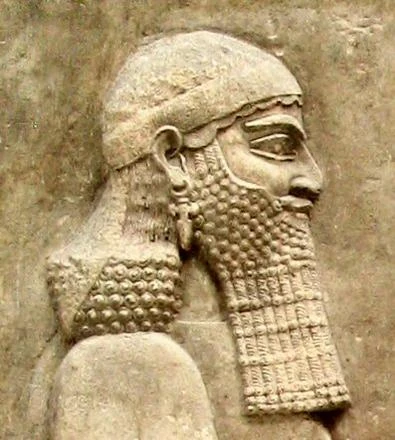
The immediate application of this prophecy are the events surrounding the Assyrian invasion of Judah under Sennacherib.

 Image result for Sennacherib

Verse 12 has the people being gathered to Jerusalem for safety, yet still frightened by the besieging Assyrian army. Sennacherib would later write how he had “shut up Hezekiah inside Jerusalem, his royal city, like a bird in a cage”. In verse 13, the threat is over (as per Isaiah 37:32; “For out of Jerusalem will come a remnant, and out of Mount Zion a band of survivors. The zeal of the LORD Almighty will accomplish this”), and their king breaks out of their enclosure, leading the remnant into the wider land.
God breaks “through the gate of the city of Jerusalem that had protected them, but now confines them.” They are described as being “like sheep in a pen.” After the sheep had been confined all night in the makeshift sheepfold, the animals are anxious to break out. In the morning the shepherd will knock down a section of the piled-up stones. He will break open the barricade wall which penned up the sheep all night in a protective enclosure. Anxious to be released from the holding pen, the sheep then rush [note the LXX translation, “they shall rush forth from among men through the breach made before them”] out after him, knocking down more stones from the makeshift fence in order to break outside.” 

The prophecy clearly has messianic aspects to it, and these aspects come together to paint an amazing picture. To get there, we will need to do a little bit of detective work, so stick with me as we explore this further.

The Breaker
Firstly, the “One who breaks open the way” in Hebrew is simply “the breaker” (one word), or “the Perez.” The word Perez here means to break through or to burst out. We see this in 2 Samuel 5:20, “So David went to Baal Perazim, and there he defeated them. He said, "As waters break out, the LORD has broken out against my enemies before me." So that place was called Baal Perazim.” And in 2 Samuel 6:8. “Then David was angry because the LORD's wrath had broken out against Uzzah, and to this day that place is called Perez Uzzah”. It is a cataclysmic bursting forth of the LORD, regardless of the wishes of man.

The Breaker is Messianic
Now, the breaker, or the perez also directs us back to Perez, the son of Judah. He is an ancestor of David, and therefore in the messianic line, but this Perez has always had a very special connection to the messiah within Jewish thought. The Authorised Jewish Daily Prayer Book, for example says; “Through the offspring of Perez we also shall rejoice and be glad.” Indeed, “Son of Perez” is a messianic title in Rabbinic literature. In both Genesis Rabbah (8:6), and Leviticus Rabbah (30) this is due to the “generations (תּוֹלְדוֹת) of Perez” in Ruth 4:18 being spelt ‘complete,’ with the initial vav. Leviticus Rabbah, 30 says; “The word generations (תּוֹלְדוֹת) whenever it occurs in the Bible is spelt defectively, and for a very significant reason. Thus the word is spelt fully [with a vav] in the case of ‘these are the generations of the heaven and of the earth’, because when God created His world, there was no Angel of Death in the world, and on this account is it fully spelt; but as soon as Adam and Eve sinned, God made defective all the generations mentioned in the Bible. But when Perez arose, his generations were spelt fully again, because from him the Messiah would arise, and in his days God would cause death to be swallowed up, as it says, ‘He will swallow up death forever’” Genesis Rabbah 12:6 adds that the vav corresponds to the six things (the numeric value of vav) that Adam was created with, yet through his sin were lost or spoiled, i.e., his lustre/shininess, his immortality, his height, the fruit of the earth, the fruit of trees and the luminaries. Verses are quoted to show;

a. that Adam originally had these in full,
b. that as a result of the fall he lost them, and
c. that the Messiah will restore them.

It concludes; “Though these things were created in their fullness, yet when Adam sinned they were spoiled, and they will not return again to their perfection until the son of Perez comes.”
Wow. Firstly, we see here that early Jewish views about the messiah were of far more than just a military leader, another Maccabee. Here he is seen as a universal saviour who restores everything that Adam lost. This sounds very similar to Romans 5 and 1 Cor 15, where Jesus is the last Adam, through whom the effects of the first Adam are reversed. 1Corinthians 15:22 For as in Adam all die, so in Christ all will be made alive. Romans 5:19 For just as through the disobedience of the one man the many were made sinners, so also through the obedience of the one man the many will be made righteous. 

Concerning the shininess, we catch a glimpse of this in the New Testament, where we find both that Jesus had it, and that we shall one day also share in it, have it restored to us through him; Matthew 17:2 “There he was transfigured before them. His face shone like the sun, and his clothes became as white as the light.” 1John 3:2 “Dear friends, now we are children of God, and what we will be has not yet been made known. But we know that when he appears, we shall be like him,” 2Corinthians 3:13-18 We are not like Moses, who would put a veil over his face to keep the Israelites from gazing at it while the radiance was fading away. … 18 And we, who with unveiled faces all reflect the Lord's glory, are being transformed into his likeness with ever-increasing glory, which comes from the Lord, who is the Spirit.

What the Breaker does
Now, beyond the spellings of the word for generations, it is the meaning of Perez name, which resulted from the circumstances of his birth, which single him out. Genesis 38:27-29 When the time came for her to give birth, there were twin boys in her womb. 28 As she was giving birth, one of them put out his hand; so the midwife took a scarlet thread and tied it on his wrist and said, "This one came out first." 29 But when he drew back his hand, his brother came out, and she said, "So this is how you have broken out!" And he was named Perez. So Perez burst out of the womb, the root meaning of the name, to burst/break through or breach, always remains in focus, highlighting this dynamic aspect of the Messiah’s mission. It is this connection which we see realized in the prophecy in Micah. That is, Perez it is flagged as messianic by the spelling of generations attached to it, and its messianic meaning itself is revealed in this prophecy.

This understanding is clear within Rabbinic literature. The Rabbinic expository work, The Priestly Gift says, “The last saviour is the Messiah, the son of David, who is descended from Judah’s son Perez... This is the Messiah who will soon appear, because it is written of him that, ‘One who breaks open the way will go up before them.” In his commentary on Micah 2:12-13, the RaDaK also wrote that it concerned “the prophet Elijah, who will come before the time of deliverance to extend the hearts of the Israelites to their heavenly father in order to be a herald of redemption to them... but their king is the Messiah king, and the Lord will go before them for at that time he will send back his Holy Spirit to Zion.” In the early Jewish midrash, the Pesikta Rabbati, it is also written; “He will redeem Israel, and He will appear at the head of them, as it is said, he who opens the breach will go up before them”

Jesus as Breaker
So, how is Jesus the perez, the breaker in the New Testament? Well, in Mark 3:27 he compares himself to a thief, breaking in. He is God, breaking in to our world. He has broken down the dividing wall between Jew and Gentile (Ephesians 2:14) and he has burst the gates of death, leading out a host of captives. And finally, he will return, bursting in on our unsuspecting world (Luke 12:39). One translation of Matthew 11:12 reads; "the kingdom of Heaven is breaking forth and everyone breaks forth with it." Note that while this is usually translated “and violent men take it by force”, the Greek word biazetai, while usually translated as a passive, can also be “makes its way with triumphant force”. In 2 Samuel and 2 Kings, in the LXX, perez is translated by biazeto.

The Breaker and Judaism
This idea of the Messiah as the breaker turns out to be incredibly important. And now the story gets really interesting; The RaMBaN (Rabbi Moses ben Nachman) described the birth of Perez as follows;

He was encircled by a hedge, and he was enclosed within it. That is why it was said ‘so this is how you have broken through the hedge and come out from within it’. Perez was the first-born, ‘the first-born through the power of the Most High, as it is written, ‘I will give to him a first-born son’. This was written about the holy person who is to come, David, the king of Israel - long may he live. Those who are wise will understand.

With this profound statement, the RaMBaN links the role of the Breaker with the central tenet of Rabbinic Judaism, as expressed in the dictum of the Mishna - Mas. Avoth Chapter 1;

MISHNAH 1. MOSES RECEIVED THE TORAH AT SINAI AND TRANSMITTED IT TO JOSHUA, JOSHUA TO THE ELDERS, AND THE ELDERS TO THE PROPHETS, AND THE PROPHETS TO THE MEN OF THE GREAT SYNAGOGUE. THE LATTER USED TO SAY THREE THINGS: BE PATIENT IN [THE ADMINISTRATION OF] JUSTICE, REAR MANY DISCIPLES AND MAKE A FENCE ROUND THE TORAH.

Fences
The word fence here can refer either to a fence of rocks (e.g. Baba Baratha 69a), or to of shrubs, i.e., a hedge. In Ruth Rabbah 25 we read, “these are the Sanhedrin who... make a hedge round the words of the Torah.”

Image result for sheepfold bible         Image result for sheepfold bible

The commentary on this verse reads; “The Torah is conceived as a garden and its precepts as precious plants. Such a garden is fenced round for the purpose of obviating wilful or even unintended damage. Likewise, the precepts of the Torah were to be ‘fenced’ round with additional inhibitions that should have the effect of preserving the original commandments from trespass.”
This is a really big deal. It is in the first verse of the first chapter of the Mishna. It describes a central goal within Judaism. They were to construct a man-made hedge was to protect the Torah, and to help Israel not to break it. We will need to look at this in a bit more detail; For a New Testament example, see 2 Corinthians 11:24 (Five times I received from the Jews the forty lashes minus one.) and Deuteronomy 25:1-3 (If the guilty man deserves to be beaten, the judge shall make him lie down and have him flogged in his presence with the number of lashes his crime deserves, 3 but he must not give him more than forty lashes. If he is flogged more than that, your brother will be degraded in your eyes.)

The Sages derived their concept of the fence from the Torah itself, where they found examples of fences. This is nicely put in Numbers Rabbah, X:8., (in its commentary on Numbers 6:2-4 "Speak to the Israelites and say to them: 'If a man or woman wants to make a special vow, a vow of separation to the LORD as a Nazirite, 3 he must abstain from wine and other fermented drink and must not drink vinegar made from wine or from other fermented drink. He must not drink grape juice or eat grapes or raisins. 4 As long as he is a Nazirite, he must not eat anything that comes from the grapevine, not even the seeds or skins.) “Hence it is written, HE SHALL ABSTAIN FROM WINE AND STRONG DRINK. (And vinegar too is forbidden) on account of drunkenness. Why did the Torah forbid ANY INFUSION OF GRAPES, seeing that one does not get drunk thereby, and it likewise prohibited the eating of anything that proceeds from the vine, even such things as do not intoxicate? Why so? From this you can infer that it is a man's duty to keep away from unseemliness, from what resembles unseemliness and even from the semblance of a semblance. From this you can infer that the Torah has put a fence about its ordinances.. .Thou shalt not approach (ib. 19). This indicates that you must not even approach a thing that leads to transgression. Keep away from unseemliness and from what resembles unseemliness! For thus have the Sages said: Keep away from a small sin lest it lead you to a grievous one; run to fulfil a small commandment, for it will lead you to an important one.” This idea is further expanded upon in Leviticus Rabbah XXIV:6. “R. Judah b. Pazzi asked: Why was the section dealing with consanguineous relationships placed next to the section dealing with holiness? Only to teach you that in every case where you find [regulations serving as] a fence against immorality you also find sanctity; and this agrees with the opinion expressed by R. Judah b. Pazzi elsewhere, namely, that who so fences himself against [the temptation to] sexual immorality is called Holy.”

Now, this concept of a fence developed to include Rabbinic authority (e.g.., Ecclesiastics Rabbah X:9), and even the death penalty. Yevamoth 90b. “Come and hear: R. Eleazar b. Jacob stated, ‘I heard that even without any Pentateuchal [authority for their rulings]. Beth din may administer flogging and [death] penalties; not, however, for the purpose of transgressing the words of the Torah but in order to make a fence for the Torah.” (see also San. 46a.). This fence can be pretty massive!

There is also some indication that the Sages were uncomfortable with the breadth of licence they had granted themselves, and tried to set limits to it. E.g., in Genesis Rabbah, XIX:3 we read; ”NEITHER SHALL YE TOUCH IT, LEST YE DIE (III, 3). Thus it is written, Add not unto His words, lest He reprove thee, and thou be found a liar (Prov. XXX, 6). R. Hiyya taught: That means that you must not make the fence more than the principal thing, lest it fall and destroy the plants. Thus, the Holy One, be He, had said, For in the day that thou eatest thereof thou shalt surely die (Gen. II,17); whereas she did not say thus, but, GOD HATH SAID: YE SHALL NOT EAT OF IT, NEITHER SHALL YE TOUCH IT [the Rabbis believing that Adam had given her the additional prohibition, thereby adding a fence to it]; when he [the serpent] saw her thus lying [for the fence was Adam’s, not God’s], he took and pushed her against it. ' Have you then died?’ he said to her; ‘just as you were not stricken through touching it, so will you not die when you eat it, but For God doth know that in the day ye eat thereof,’ etc.”

It should also be remembered that the Sages were living in Post-exile Judea, that they had experienced the reality of God’s wrath for breaking His commandments, and that they desired to understand, keep and protect them.

The Law, Prophets and Fences
Within the Bible, even the Law was given as a fence to Israel, to separate and protect them (Deuteronomy 7:6-11). As they kept its laws, so God blessed and protected them. What is more, the roles of Moses and the prophets are also described in relationship to the Law. They are there to build up, to repair and to maintain this fence or wall.

Ezekiel 13:3-5; This is what the Sovereign LORD says: Woe to the foolish prophets who follow their own spirit and have seen nothing! 4 Your prophets, O Israel, are like jackals among ruins. 5 You have not gone up to the breaks in the wall to repair it for the house of Israel so that it will stand firm in the battle on the day of the LORD. …

Ezekiel 22:26-31 Her priests do violence to my law and profane my holy things; they do not distinguish between the holy and the common; they teach that there is no difference between the unclean and the clean; and they shut their eyes to the keeping of my Sabbaths, so that I am profaned among them. …29 The people of the land practice extortion and commit robbery; they oppress the poor and needy and mistreat the alien, denying them justice. 30 "I looked for a man among them who would build up the wall and stand before me in the gap on behalf of the land so I would not have to destroy it, but I found none. 31 So I will pour out my wrath on them and consume them with my fiery anger, bringing down on their own heads all they have done, declares the Sovereign LORD."

Image result for ezekiel stand in the gap

We see this idea also in Rabbinic writings;
1). Rashi quotes Ezekiel 13:5, where the prophets are criticised for not fencing the house of Israel, whence we learn that ' fence’ is metaphorical for the work of prophets.
2). Ruth Rabbah, Prologue V. “R. Nehemiah “To whom can Moses be compared? To a faithful shepherd whose fence fell down in the twilight. He arose and repaired it from three sides, but a breach remained on the fourth side, and having no time to erect the fence, he stood in the breach himself. A lion came, he boldly withstood it; a wolf came and still he stood against it. But ye! Ye did not stand in the breach as Moses did. Had ye stood in the breach like Moses, ye would have been able to stand in the battle in the day of God's anger.”
3). Midrash Rabbah Ester, VII:13. “Elijah then betook himself to Moses and said to him: ' O thou faithful shepherd, how many times hast thou stood in the breach for Israel and quashed their doom so that they should not be destroyed, as it says, Had not Moses His chosen stood before Him in the breach, to turn back His wrath, lest He should destroy them”

The Pharisees and Fences
So, the Torah has been given and fences have been erected around the commandments to protect Israel from breaking them, the fences are there to protect and help them. The prophets were sent to repair and maintain the fences, and the rabbis assumed the burden of that awesome responsibility. This concept is central to Judaism - chapter 1, verse 1 of the Mishna; MAKE A FENCE AROUND THE TORAH. Likewise, in the Talmud, in Berakot. 64a. the Pharisees refer to their disciples as the builders, thereby linking the two ideas of the Mishna into one, on the basis of the Pharisaic word play between ×‘ָּ× ַ×™ְ  and ×‘ֹּ× ֵ×™ re Isaiah 54:13; R Eleazer said in the name of R. Hanina: The disciples of the wise increase peace in the world, as it says, And all thy children shall be taught of the Lord, and great shall be the peace of thy children. Read not banayik [thy children] but bonayik [thy builders]. 

Even their sectarian opponents within the Jewish community referred to the Pharisees along the same lines; see the Essene Damascus Covenant 4:19; "the builders of the wall ... are caught in fornication." This idea of being builders of a fence is therefore a central concept within Judaism, and will give us profound insight into the role of the Messiah within Judaism.

The Messiah (the Breaker) and fences

Image result for sheep rushing sheepfold

You see, the system, the Law, the fence, the rabbis, is largely self-perpetuating, self-correcting and maintains itself. All of which begs the question; where within this system is the Messiah? The messiah is also a central Jewish belief, the twelfth of Maimonodies thirteen principles being; "I believe with perfect faith in the coming of the messiah, and though he may tarry, still I await him every day." So, what about the Messiah? What is his role in this system?? Is he similar to the prophets, or a larger version of a rabbi? What does the Messiah do?

The RaMBaN (Rabbi Moses ben Nachman) described the birth of Perez as follows,

He was encircled by a hedge, and he was enclosed within it. That is why it was said ‘so this is how you have broken through the hedge and come out from within it’. This was written about the holy person who is to come, David, the king of Israel - long may he live. Those who are wise will understand.

Micah 2:12-13 "I will surely gather all of you, O Jacob; I will surely bring together the remnant of Israel. I will bring them together like sheep in a pen, like a flock in its pasture; the place will throng with people. 13 One who breaks open the way will go up before them; they will break through the gate and go out. Their king will pass through before them, the LORD at their head."

Here the incredibly radical activity of the Messiah is thrown into sharp relief. Jesus said; “for all the prophets and the law prophesied until John came”. As seen, the prophets likewise were those who repaired the fence, who stood in the breach. But with the coming of the Messiah, everything is changed. He does not simply continue in the tradition of the prophets, but the night is over, and the Shepherd breaks down the wall, and the sheep rush out after Him. And why is the night over?? Has this simply happened, and the Messiah is just the first to respond to the changed situation? NO! it has changed only because he has come! It is his coming that has made all the difference! Because he is the sun of righteousness, he is the light of the world. Malachi 4:2 But for you who revere my name, the sun of righteousness will rise with healing in its wings. And you will go out and leap like calves released from the stall.

Matthew 11:12 “the kingdom of heaven is breaking forth, and everyone breaks forth with it”.
It is because he, the messiah has come that the walls are no longer necessary or appropriate! They were needed all through the night, all who came before were thieves and robbers, and the walls kept the flock safe. But now day has come, the flock need to go out and pasture. The coming of the messiah, changes everything.  Before Jesus, the protection was needed, but now the sheep can go out to pasture, and as Micah 2:13 notes, they go out through the Gate.
So, how did Jesus break through the hedge and out from the Law? (as the RAMBAN said)
Looking firstly at the Rabbinic hedge, in Matthew 15:13 Jesus says, “every plant that my heavenly Father has not planted will be uprooted.”

Now, beyond even the man-made rules, the Law itself, as already noted, can also be seen as a fence, as seen in Leviticus Rabbah 1:10 “Said R. Eleazar: ‘Even though the Torah was given as a fence at Sinai,’” [to protect her and to prevent her from violating the Lord’s commandments]. The Law was given both to protect and separate Israel from God, and also to separate and protect Israel from the nations.  Leviticus 22:31-32 "So you shall keep My commandments, and do them: I am the LORD. 32 "And you shall not profane My holy name, but I will be sanctified among the sons of Israel: I am the LORD who sanctifies you,” Deuteronomy 14:2 “for you are a people holy to the LORD your God. Out of all the peoples on the face of the earth, the LORD has chosen you to be his treasured possession.”

We see this again in Ephesians 2:14-15 where Paul shows how Jesus destroyed “the barrier, the dividing wall” by His death. “He has abolished the law with its commandments and ordinances”. We see in this again the radical, revolutionary activity of the Jewish Messiah – He is breaking through the Law itself!

Surprisingly, this agrees with a minority opinion within Rabbinic thought. The idea of the Messiah as lawgiver goes right back to Genesis 49:10; (The scepter will not depart from Judah, nor the ruler's staff from between his feet, until he comes to whom it belongs and the obedience of the nations is his) where “ruler’s staff” (וּמְ×—ֹ×§ֵ×§) can also mean “lawgiver” as for example, it is translated in Isaiah 33:22 (For the LORD is our judge, the LORD is our lawgiver, the LORD is our king; it is he who will save us.) This suggests that while expressing eternal truths, the Torah in its present form was only given for a certain time, until the Messianic age, where there would be Messianic Torah.  Sanhedrin 97a says; “The world is to exist 6,000 years. In the first 2,000 years there was desolation [no Torah]. 2,000 years Torah flourished; the next 2,000 years is the Messianic age.” (this is not meant to say that Torah will cease, but to distinguish the ages).
Midrash Qohelet 71:8 “The Torah which man learns in this world is but vanity compared with the teaching of the Messiah.”

The thought of the Torah changing in the ‘Age to Come’ is again made perfectly clear in the rendering of Deuteronomy 17:18, in Sifra. Here it is stated that the Lord wrote a copy of the Mishna-Torah for Himself, and that He would not be content with the Mishna-Torah of the fathers. The question is asked: ‘why does He say Mishna [from the root shana, to repeat] -Torah? Because it is destined to be changed.” The Pesikhta Rabbati says that ’the Torah will revert to its original state’... Even the fearful thought of abrogation appears in Nida 66b: ‘in the future the commandments will be annulled.’

A brief aside; The breaking down of the Law does not equate to the termination of Israel. To again quote Paul (who is here using the seventh middah of Hillel, dabar halamed me'inyano, which looks at context/time); Galatians 3:17 “What I am saying is this: the Law, which came four hundred and thirty years later, does not invalidate a covenant previously ratified by God, so as to nullify the promise.” See also Psalm 105:8-11.

Now, there are a number of hints as to how the Messiah will break through this fence/hedge.

1). Through the giving of a new law.
Yalqut Isaiah [26, siman 296] states that, “The Holy One - may He be blessed - will sit and draw up a new Torah for Israel, which will be given to them by the Messiah”. The Targum of Isaiah 12:3 likewise reads in part, “And you shall receive new instruction with joy from the Chosen of righteousness”.
This was fulfilled in John 13:34, “I give you a new commandment, that you love one another just as I have loved you.” This statement is also Messianic on another level, for only Moses could give laws to Israel, and he prophesied of the Messiah, saying; (Deuteronomy 18:15) “The LORD your God will raise up for you a prophet like unto me from among your own brothers. You must listen to him.” No other prophet ever gave a new commandment to Israel – they all told the people to obey the Law of Moses. When Jesus said “I give you a new commandment” he was being profoundly messianic!

2). Through the closure of the sacrificial system 
This is taught on the Midrash on the inauguration of Aaron’s priesthood; “R. Phinehas and R. Levi and R. Johanan said in the name of R. Menahem of Gallia: ‘In the Time to Come all sacrifices will be annulled, but that of thanksgiving will not be annulled, and all prayers will be annulled, but [that of] Thanksgiving will not be annulled.’” Midrash Rabbah Leviticus IX:7.
This was fulfilled in the sacrifice of Jesus, “Unlike the other High Priests, He has no need to offer sacrifices day after day ... this He did once and for all when He offered Himself” Hebrews 7:27. Concerning the point of the continuation of the sacrifice of thanksgiving, see Hebrews 13:15. “Through Jesus, therefore, let us continually offer to God a sacrifice of praise--the fruit of lips that confess his name.”

3). By abolishing the dietary laws.
The Midrash on Psalm 146:7 (“The LORD sets prisoners free,”) states that even the laws of kashrut (diet) will be abolished. “’The Lord sets the prisoners free’... What does this ‘setting free of prisoners’ mean? ... in the future the Holy one will make all unclean animals fit for eating.” Or, in another translation, “every creature that is considered unclean in the present world, the Holy One, blessed be He, will declare clean in the age to come.” The reason for this is that the Hebrew here “sets prisoners free” set free (n-t-r), is also used of permit, and prisoner, asir, is similar to forbidden/prohibited, asur. the word used of forbidden foods (the root meaning is to be bound). So, the phrase “sets prisoners free” can also read “permits the forbidden.”
This was fulfilled in Mark 7:19, “thus He declared all foods clean”. Here we see Jesus as the breaker, breaking through the hedge or fence of the Law. Note also that in the Psalm, it is the LORD who does this!

4). By leading us out from the realm of the Torah (Micah 2:13).
The Rabbis taught that the jurisdiction of the Torah ended with death. Shabbat 30a. “And thus R. Johanan said, ‘What is meant by the verse, Among the dead [I am] free? Once a man dies, he becomes free of the Torah and good deeds.’” This is also taught elsewhere; Nidah 61b. “Our Rabbis taught: A garment in which [both linen and wool threads are woven may not be worn by the living] ... but it may be made into a shroud for a corpse. R. Joseph observed: This implies that the commandments will be abolished in the Hereafter. Said Abaye (or as some say R. Dimi) to him: But did not R. Manni in the name of R. Jannai state, ‘This was learnt only in regard to the time of the lamentations but for burial this is forbidden’? — The other replied: But was it not stated in connection with it, ‘R. Johanan ruled: Even for burial’? And thereby R. .Johanan followed his previously expressed view, for R. Johanan stated: ‘What is the purport of the Scriptural text, Free among the dead? As soon as a man dies he is free from the commandments’”. Thus in the resurrection life, we are not under the law.

So, the resurrected Jesus is no longer under the law, and as we follow Him (Micah 2:13), we also are led out from it. This is the teaching in Romans 7:4. “So, my brothers, you also died to the law through the body of Christ, that you might belong to another, to him who was raised from the dead, in order that we might bear fruit to God.”

5). through simplification;
Makkoth 23-24. Moses was given 613 precepts; of these there are 365 (thou shalt) in accordance with the number of days in the year, and 248 (thou shalt not) according to the number of bones in a man’s body... Came David and cut them down to eleven (Ps 15)... Came Isaiah and cut them down to six (Isa 33:15-16)... Came Micah and cut them to three (Mi 6:8)... Isaiah came back and cut them down to two (Isa 61:1)... Came Habakkuk and cut them to one, as it is written (Habakkuk 2:4), ‘the righteous shall live by faith’. 

This prophecy (for all the prophets prophesied only for the days of the Messiah, and certainly David, Isaiah, Micah and Habakkuk were fully Torah observant) is fulfilled in the gospel of Jesus Christ as described in Romans 1:17; “For in this gospel a righteousness from God is revealed, a righteousness that is by faith from first to last, just as it is written: ‘the righteous shall live by faith.’”
So we can see the Messiah is the one who breaks out of the confines of the law, abolishing its sacrifices and dietary rules, simplifying and giving us a new commandment. Now we also rush out, following Him. As Perez burst out of the womb to new life, so we have left our school master behind. It is through His death and resurrection that Jesus made the breach; Hebrews 10:19-20 Therefore, brothers, since we have confidence to enter the Most Holy Place by the blood of Jesus, 20 by a new and living way opened for us through the curtain, that is, through His flesh.” We are no longer under the Law, we have a new and living way to enter the Most Holy Place! We enter through the body of our Messiah!

Looking briefly at our original question, “how was Jesus the Jewish messiah?” when Jesus gave a new commandment, when he declared all foods clean, when he fulfilled the sacrificial commands, when he died and led us out of the realm of the Torah, he was doing Messianic Jewish things! This is Jesus being the Jewish Messiah.

So Jesus, as the son of Perez, is a universal saviour, restoring to humanity everything which Adam lost. Also in this role, and again, based on a prophecy about the Perez, Jesus broke out of the walls which had penned in the people, needed during the night, but now preventing them from going out to pasture. The Jewish Messiah is utterly different from the prophets who came before, whose job was to repair the wall. The Messiah is different because he himself is the sun of righteousness, with him, the day has arrived. He is the light of the world.

We will now examine in more detail the second half of the prophecy in Micah; “One who breaks open the way will go up before them; they will break through the gate and go out. Their king will pass through before them, the LORD at their head."

What are the consequences of this prophecy, firstly for the Messiah, and secondly, for the people of Israel?

i). For the Breaker
“The breaker will go up before them; they will break through the gate and go out. Their king will pass through before them, the LORD at their head."

1). Divinity.
 “their king will pass before them, the LORD at their head”
The first thing we learn from the parallel terms here is that the breaker of verse 12 is also the king, and that the king is the LORD. We catch a glimpse of this in Isaiah 52;7-8 “How beautiful on the mountains are the feet of those who bring good news, who proclaim peace, who bring good tidings, who proclaim salvation, who say to Zion, "Your God reigns!" Listen! Your watchmen lift up their voices; together they shout for joy. When the LORD returns to Zion, they will see it with their own eyes.”

Importantly, the linking of the Messiah king to the LORD is also found in Rabbinic literature; “in the Midrash Tehillim on Psalm 21:3 [Rabbi Simeon] states that God would; ‘set His crown upon the head of King Messiah, and cloth Him with His honour and majesty.’.. The Midrash continues with two designations of Messiah, stating that He is: ‘YHVH a man of war’ and: ‘YHVH is our righteousness’... The Midrash Aqah on Lamentations 1:6 .. asks the question; ‘What is the name of King Messiah?’ The answer given by Rabbi Abba b. Kahanna is: ‘His name is YHVH’”. Again, we saw this in Psalm 147, where it was the LORD who would declared all foods clean. The prophecy of Micah confirms that the Messiah has the divine name, and does divine things.

This was fulfilled by Jesus in John 8:58 "I tell you the truth," Jesus answered, "before Abraham was born, I am!" Look again at Peter’s confession; "You are the Messiah, the Son of the living God." They are not two separate descriptions (You are the Messiah and the Son of the living God), they are synonyms! The Messiah IS the son on the living God!

“their king will pass before them, the LORD at their head”

2). The serpent’s bite
"whoso breaketh through a fence, a serpent shall bite him" Ecclesiastes 10:8.
Having seen how the Sages perceived their task in terms of protecting the status quo, by placing a fence around the Torah (itself perceived as a fence), it is unsurprising that they should have employed this verse to guard both their work and God’s commands;
Midrash Rabbah Ecclesiasies I:25. “For whoever breaks down a fence erected by the Sages will eventually suffer; as it is stated, ‘Whoso breaketh through a fence, a serpent shall bite him' (Eccl. X, 8).”
Midrash Rabbah Ecclesiasies X:12. [You ask (the serpent),] "Why do you lurk among the hedges? " Because I broke through a fence of the world.’ R. Simeon b. Yohai taught: The serpent broke through a fence of the world [by violating God’s law] and was therefore made the executioner of all who break through fences.

To what extent does this understanding apply to the ben Perez, to the breaker?
On the cosmic level, as the as the one breaking into the world, who will restore the Edenic, pre-fall stature of humanity (the second Adam), a run in with the Snake, who opposes this purpose, conforms to the Messianic prophecy from the fall; Genesis 3:15. “he will strike your head, and you will strike his heel” The serpent in this sense now guards the fallen world against the breaking in of its redeemer. John 12:31 Now is the time for judgment on this world; now the prince of this world will be driven out. John 16:11 and in regard to judgment, because the prince of this world now stands condemned.

The strong man has been bound, however, and his goods liberated. Colossians 2:15 “And having disarmed the powers and authorities, he made a public spectacle of them, triumphing over them by the cross.” 1John 3:8 “The reason the Son of God appeared was to destroy the devil's work.”
As the one who broke through the fence, the Messiah suffered the consequences (“whoso breaketh through a fence, a serpent shall bite him”), was struck by the Serpent, and tasted death for everyone. For all who follow him through the breach he made. He went first and suffered the penalty. As for those breaking out with the King, see Romans 16:20; “The God of peace will soon crush Satan under your feet.”

As to the Oral Torah, it was His criticism of this that led to the Sages desiring that He would suffer the punishment. Matthew 15:1-13 Then some Pharisees and teachers of the law came to Jesus from Jerusalem and asked, 2 "Why do your disciples break the tradition of the elders? They don't wash their hands before they eat!" 3 Jesus replied, "And why do you break the command of God for the sake of your tradition? … 10 Jesus called the crowd to him and said, "Listen and understand. 11 What goes into a man's mouth does not make him 'unclean,' but what comes out of his mouth, that is what makes him 'unclean.' " 12 Then the disciples came to him and asked, "Do you know that the Pharisees were offended when they heard this?" 13 He replied, "Every plant that my heavenly Father has not planted will be pulled up by the roots.”

The serpent’s bite was prophesied, as was the suffering the messiah would endure; in being bitten by the serpent, in his suffering for us, Jesus was being messianic.

Isaiah 53:4-11 Surely he took up our infirmities and carried our sorrows, yet we considered him stricken by God, smitten by him, and afflicted. 5 But he was pierced for our transgressions, he was crushed for our iniquities; the punishment that brought us peace was upon him, and by his wounds we are healed.…. 8 By oppression and judgment he was taken away. And who can speak of his descendants? For he was cut off from the land of the living; for the transgression of my people he was stricken. 9 He was assigned a grave with the wicked, and with the rich in his death, though he had done no violence, nor was any deceit in his mouth. 10 Yet it was the LORD's will to crush him and cause him to suffer, and though the LORD makes his life a guilt offering, he will see his offspring and prolong his days, and the will of the LORD will prosper in his hand. 11 After the suffering of his soul, he will see the light of life and be satisfied; by his knowledge my righteous servant will justify many, and he will bear their iniquities.

We see that this passage applied to the messiah in Jewish thought at the time;

Sanhedrin 98b; What is his [the Messiah's] name? — The Rabbis said: His name is 'the leper scholar,' as it is written, Surely he hath borne our griefs, and carried our sorrows: yet we did esteem him a leper, smitten of God, and afflicted

Targum Jonathan: "Behold my servant Messiah shall prosper; he shall be high and increase and be exceedingly strong..."

Luke 24:25-26 He said to them, "How foolish you are, and how slow of heart to believe all that the prophets have spoken! 26 Did not the Messiah have to suffer these things

Acts 3:17-19 "Now, brothers, I know that you acted in ignorance, as did your leaders. 18 But this is how God fulfilled what he had foretold through all the prophets, saying that his Messiah would suffer. 19 Repent, then, and turn to God, so that your sins may be wiped out, that times of refreshing may come from the Lord,

When he suffered, Jesus was being messianic!

3). Ascension.
“The one who breaks through, going up before them.” “Alah haPerez
The word “going up” here, alah, is also used of eagles ascending (Isa 40:31), of going up to meet with God (Ex 19:3) and of offerings offered to God (2 Kings 3:20). As often a prophecy fits the time given, but only finds its truest meaning in the Messiah (“All the prophets prophesied only for the days of the Messiah” Berakoth 34b), this word of the King breaking through, and then going up from Jerusalem, finds fulfilment in Acts 1:9; After he said this, he was taken up before their very eyes, and a cloud hid him from their sight.
Jesus made Aliyah from Jerusalem!
John 14:3 And if I go and prepare a place for you, I will come back and take you to be with me that you also may be where I am. Isaiah 52:8 Listen! Your watchmen lift up their voices; together they shout for joy. When the LORD returns to Zion, they will see it with their own eyes. 
The ingathering of the Gentiles

We began by asking when did Jesus do Jewish/Messianic things?

We started in Micah, with a people crowded for safety into a walled city, sheep in a sheep-pen overnight. All who tried to break down the walls before were thieves and robbers, the Assyrian army etc. It would have been wrong of the Pharisees to try and break down the walls – the last time sin and lawlessness were rife in Israel, the Babylonians destroyed them. Jesus was seen as being different from the scribes and the Pharisees, because he taught with authority, but the scribes and the Pharisees would have been wrong to teach with their own authority – their authority was rightly the Law of Moses. But now, with the coming of the sun, the gate can be opened, the sheep rush out to pasture. The walls were needed and vital; as long as the Assyrian army was outside, but in the very act of breaking through and making Aliyah from Jerusalem, the messiah defeated the enemy, and made it safe for those following him to leave with him. And this has further consequences!

A light to the Gentiles
John 10:7-16 Therefore Jesus said again, "I tell you the truth, I am the gate for the sheep.
 8 All who ever came before me were thieves and robbers, but the sheep did not listen to them. 9 I am the gate; whoever enters through me will be saved. He will come in and go out, and find pasture. 10 The thief comes only to steal and kill and destroy; I have come that they may have life, and have it to the full. 11 "I am the good shepherd. The good shepherd lays down his life for the sheep. …15 just as the Father knows me and I know the Father--and I lay down my life for the sheep. 16 I have other sheep that are not of this sheep pen. I must bring them also. They too will listen to my voice, and there shall be one flock and one shepherd.

It is because they have left the pen, and the dividing wall has been broken down that the other sheep can be brought together. The Scriptures and the Rabbis affirm that one of the central tasks of the Messiah is to be a light to the Gentiles. “The scepter will not depart from Judah, nor the ruler's staff from between his feet, until he comes to whom it belongs and the obedience of the nations is his!” "The Root of Jesse will spring up, one who will arise to rule over the nations; the Gentiles will hope in him." (Isaiah 11:10, Romans 15:12) Luke 2:28-32 Simeon took him in his arms and praised God, saying: 29 "Sovereign Lord, as you have promised, you now dismiss your servant in peace. 30 For my eyes have seen your salvation, 31 which you have prepared in the sight of all people, 32 a light for revelation to the Gentiles and for glory to your people Israel."

The spread of the knowledge of the God of Israel, under the banner of his Messiah, has again been a profoundly Messianic thing to have happened. " 'I have made you a light for the Gentiles, that you may bring salvation to the ends of the earth.' " (Isaiah 49:6, Acts 13:47). That is, when Jesus broke down the dividing wall between Jews and Gentiles, he was being Messianic. Ephesians 2:12-20 “remember that at that time you were separate from Christ, excluded from citizenship in Israel and foreigners to the covenants of the promise, without hope and without God in the world. 13 But now in Christ Jesus you who once were far away have been brought near through the blood of Christ. 14 For he himself is our peace, who has made the two one and has destroyed the barrier, the dividing wall of hostility, 15 by abolishing in his flesh the law with its commandments and regulations. His purpose was to create in himself one new man out of the two, thus making peace,”

Again, we started by asking when did Jesus do Messianic things? And with the prophecy in Micah “The breaker will go up before them; they will break through the gate and go out. Their king will pass through before them, the LORD at their head." We now have a partial answer;

When Jesus declared all foods clean, he was being messianic.
When Jesus said “a new commandment I give unto you” he was being messianic.
When Jesus said “before Abraham was, I AM” he was being messianic.
When Jesus face shone like the sun, he was being messianic.
When Jesus suffered unto death, he was being messianic.
When Jesus defeated Satan and had the nail go through his feet, he was being messianic.
When Jesus made Aliyah from Jerusalem, he was being messianic.

That is, Jesus teaching, his transfiguration, his death and his ascension are all things the Jewish Messiah should do! This is why “You are the Messiah, the Son of the living God” is so fundamental and so powerful. 

Clearly, Jesus did not exhaust his messianic ministry in his first coming;

When he abolished the dividing wall between Jews and Gentiles he was being messianic. 
When through Jesus, the God of Israel is preached to the Nations, Jesus is being messianic.
And when Jesus returns to restore everything promised in the prophets, he will be being messianic.
When Jesus returns as king of Israel, he will be being messianic.
When Jesus returns and leads us to the place he has prepared, he will be being messianic.

Focusing on the person of the Messiah, Micah’s prophecy then speaks of His mission, to break out, and to liberate others, of His divinity, of the cost to Him, and of His exaltation on high. Here we see the Messiah as king, God and breaker, who does not stand in the breach, but creates it, bursting through the protective walls and into the wider world. This Messiah is no mere continuation of the old order, but violently ushers in the new. As ha Peretz, He breaks down the walls between Jew and Gentile. Within the prophecy itself, the mood is one of triumph. He is ben Perez, who breaks the walls between God and man (Isaiah 59:2), bursts the gates of death, and restores the Edenic stature of man. He is thus a universal Messiah, who breaks into this world, who is bitten by and crushes the serpent, and who ascends before them. He has the Name of God, and all His generations are perfect (Isaiah 53: 10). For a hurting people who wonder how Jesus was the Messiah for them, this prophecy is a powerful word from the Lord.

1 Corinthians 15: 45-49 So it is written: "The first man Adam became a living being"; the last Adam, a life-giving spirit.  47 The first man was of the dust of the earth, the second man from heaven. 48 As was the earthly man, so are those who are of the earth; and as is the man from heaven, so also are those who are of heaven. 49 And just as we have borne the likeness of the earthly man, so shall we bear the likeness of the man from heaven.

Motive - why be the Breaker?
So, we can see what the Messiah is doing, and how it works. But a final question still remains;

"For he himself is our peace, who has made the two one and has destroyed the barrier, the dividing wall of hostility, by abolishing in his flesh the law with its commandments and regulations. His purpose was to create in himself one new man out of the two, thus making peace,"

Why would the Jewish messiah abolish the Law, the Torah, and its commandments and regulations?? This was God’s great gift to the Jewish people, which kept them safe and preserved them for thousands of years. More than that, the Jewish people love the Law!
Psalm 19:7-11 The law of the LORD is perfect, reviving the soul. The statutes of the LORD are trustworthy, making wise the simple.
 8 The precepts of the LORD are right, giving joy to the heart. The commands of the LORD are radiant, giving light to the eyes.
 9 The fear of the LORD is pure, enduring forever. The ordinances of the LORD are sure and altogether righteous.
 10 They are more precious than gold, than much pure gold; they are sweeter than honey, than honey from the comb.

Paul affirms; Romans 7:12 So then, the law is holy, and the commandment is holy, righteous and good.
So why would Jesus abolish it? Even if some of the Rabbis agreed that it would be abolished, why??

He does it because, while the Jewish people love the Law, God loves them! You see, one of the functions of the Law was to keep a distance between us and God;

Exodus 20:18-21 When the people saw the thunder and lightning and heard the trumpet and saw the mountain in smoke, they trembled with fear. They stayed at a distance 19 and said to Moses, "Speak to us yourself and we will listen. But do not have God speak to us or we will die." 20 Moses said to the people, "Do not be afraid. God has come to test you, so that the fear of God will be with you to keep you from sinning." 21 The people remained at a distance, while Moses approached the thick darkness where God was.

Deuteronomy 18:15-16 The LORD your God will raise up for you a prophet like me from among your own brothers. You must listen to him. 16 For this is what you asked of the LORD your God at Horeb on the day of the assembly when you said, "Let us not hear the voice of the LORD our God nor see this great fire anymore, or we will die."

Exodus 19:12 Put limits for the people around the mountain and tell them, 'Be careful that you do not go up the mountain or touch the foot of it. Whoever touches the mountain shall surely be put to death. 

Rather than being protected from God by the Law, through Jesus we draw near to him!

Ephesians 3:10-12 His intent was that now, through the church, the manifold wisdom of God should be made known to the rulers and authorities in the heavenly realms, 11 according to his eternal purpose which he accomplished in Christ Jesus our Lord. 12 In him and through faith in him we may approach God with freedom and confidence.

Hebrews 7:18-19 The former regulation is set aside because it was weak and useless (for the law made nothing perfect), and a better hope is introduced, by which we draw near to God.

The Messiah desires to meet with us, he bursts through our walls of separation and will not allow us to deal with Him from a distance, we will not interact with us via any intermediary even something as perfect as the Law, but he desires to see us face to face.

            A garden locked is my sister, my bride, a garden locked, a fountain sealed...
            I come to my garden, my sister, my bride; I gather my myrrh with my spice..
Make haste my beloved, and be like a gazelle or a young stag on the mountain of spices. 
Song of Songs 4:12

These are the words of love!

Don’t let anything come between you and God! Not your ministry, not your partner, not your family! No matter how perfect, how beautiful. God loves us and will not tolerate being kept at a distance from us. It is good to be loved by a jealous God!! We are the apple of his eye.

Application
So, what does all this have to do with us here today? Well, we know that Jesus ever lives to intercede for us, to bless us. Many of us also love the different names and titles of Jesus, shepherd, friend, prophet, priest king etc. Well, another wonderful name of Jesus is the Perez, the Breaker. The one who bursts through. Maybe you have a friendship with someone, and somehow you have never been able to discuss the things of God with them, or even just in a conversation – remember that Jesus is the breaker, that is one of his very names! Lord, break into this friendship, Lord, break into this conversation – that is who you are! Again, for friends trapped in sin, or if you are in an impossible situation, with no way out, Lord, break into this, burst through my walls and lead me out to pasture.